The Attention Economy Is a Hostage Situation
Attention was supposed to be the price of free services. It became the product. The architecture that followed was not designed for exchange. It was designed for capture.
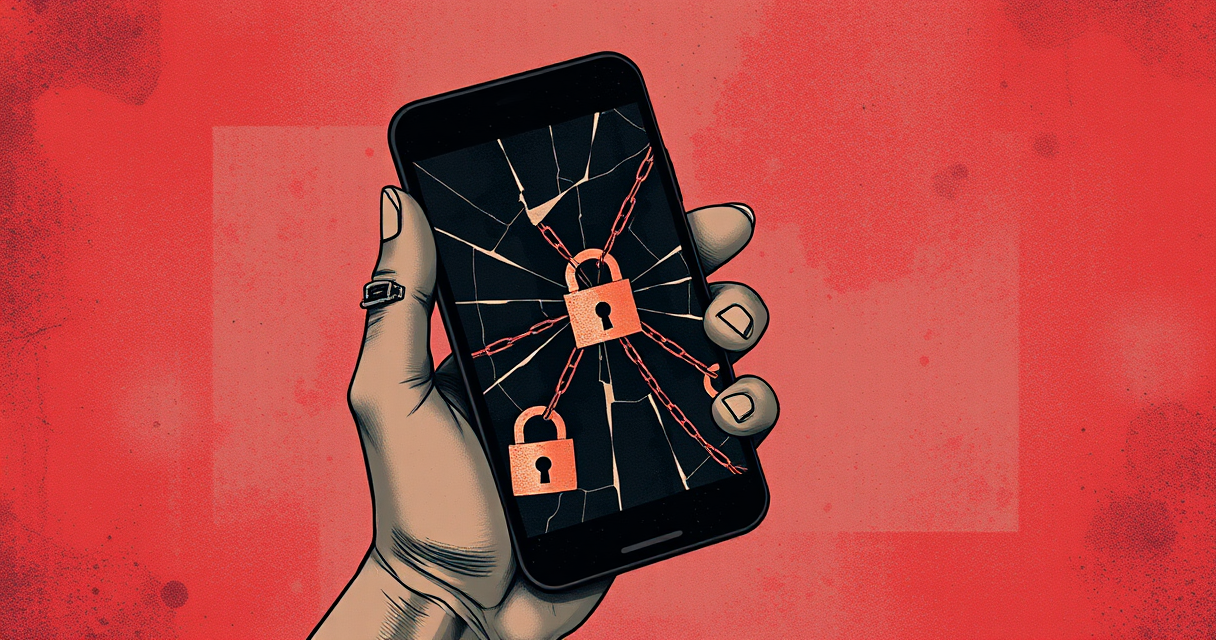
There was a period, brief in retrospect, when the exchange was legible. A service existed. It displayed advertisements. The advertisements funded the service. The user understood the arrangement and the arrangement was proportional. Modest attention for modest utility. Both sides could see the terms.
That is not what exists now.
What replaced it was not a renegotiated deal. It was a different system entirely, one that redefined the relationship between the user and the platform without announcing that a redefinition had occurred. The objective shifted from serving the user to retaining the user. The measure of success moved from satisfaction to session duration. The question guiding product development stopped being “is this useful” and became “how long can we keep them here.”
The transition happened gradually enough that most people experienced it as a series of minor interface changes. A feed that no longer ended. A notification that arrived at a suspiciously effective moment. A recommendation algorithm that seemed to know what you wanted before you did. Each change was small. The cumulative effect was structural.
The engineering of compulsion
The techniques were not invented by the platforms that deployed them. They were borrowed from industries that had spent decades studying compulsive behavior and adapted for digital environments with extraordinary precision.
Variable reward schedules, the mechanism that makes slot machines effective, were built into social feeds. The user pulls down to refresh. Sometimes there is something new and interesting. Sometimes there is not. The unpredictability is what makes the action repeatable. If the reward were consistent, the behavior would stabilize. Because it is variable, the behavior escalates. This is not a metaphor. It is the same neurological pathway, producing the same behavioral pattern, implemented in software instead of hardware.
Infinite scroll removed the structural cues that once signaled a natural stopping point. A page had a bottom. A newspaper had a last page. A television broadcast had a schedule. These boundaries were not arbitrary. They were cognitive signals that told the brain a unit of consumption was complete. Removing them transferred the burden of stopping from the environment to the individual. The design eliminated the moment where the brain would otherwise register completion.
Notification systems evolved from informational to persuasive. Early notifications reported events. Later notifications were engineered to produce returns. The timing, the batching, the specific language, the red badge count that refuses to resolve itself. Every element was optimized not for the user’s awareness but for the platform’s retention metrics. The notification does not serve you. It retrieves you.
Each of these techniques, in isolation, could be described as a design choice. Together, they constitute an environment calibrated to extend engagement beyond what the person would independently choose. That is not a product. It is a behavioral capture system.
What was lost
The consequence that receives the least discussion may be the most significant.
Human cognition depends on unstructured time. The neurological process called default mode network activation occurs when the mind is not engaged with external input. It is when the brain consolidates memory, generates novel associations, processes emotional experience, and performs the background computation that surfaces later as insight, creativity, or simply the sense of knowing what you think about something.
This process requires a specific condition. Boredom.
Not the performed boredom of complaint. The quiet, undirected state where the mind has nothing to respond to. The condition that, for most of human history, was an unavoidable feature of daily existence. Waiting in line. Riding a bus. Sitting in a room with nothing to do. The gaps between structured activity where nothing in particular was happening.
Those gaps have been colonized. The average interval between phone checks during waking hours has compressed to single-digit minutes in most studies. The device is present in every pause, every line, every idle moment. The spaces that once belonged to undirected thought now belong to the feed.
The result is not stupidity. People are not less intelligent. The result is a specific cognitive deficit: a diminished capacity for the kind of thinking that requires sustained internal attention. Reflection. Synthesis. The slow assembly of a complex position from disparate inputs. These processes need time that is no longer available, not because it was taken by force, but because it was filled before the person noticed it was gone.
A population that consumes information at unprecedented volume and generates original thought at a diminishing rate is not experiencing a failure of character. It is experiencing an environmental shift. The habitat changed. The cognition adapted.
The lock
The standard response is that this is a discipline problem. Log off. Set screen time limits. Practice mindfulness. Take a digital detox. The framing locates the problem inside the individual and prescribes individual solutions.
This framing is convenient for the platforms and inaccurate as a description of the situation.
The real constraint is not psychological. It is infrastructural. Over the past fifteen years, the platforms absorbed the communication channels that people depend on for the basic operations of their lives. Family coordination happens inside them. Professional networks exist within them. School systems distribute announcements through them. Community organizations, medical providers, local governments, landlords, employers, all route critical information through platforms that were designed, from the ground up, to maximize time on site.
Leaving a platform is not comparable to breaking a habit. It is comparable to leaving an infrastructure. The cost is not measured in lost entertainment. It is measured in severed connections, missed information, and exclusion from the systems that organize daily life.
A person can decide to stop using a social network. They cannot decide that their child’s school will stop using it for parent communications. They cannot decide that their professional industry will abandon the platform where job opportunities circulate. They cannot decide that their family group chat will migrate to something less extractive. The switching cost is not personal. It is relational. And the platforms understood this dynamic early enough to design for it deliberately.
This is the mechanism that converts a convenience into a dependency and a dependency into something harder to name. The user is not forced to stay. They are placed in conditions where leaving costs more than staying, and the cost is denominated in relationships rather than money. The voluntary language remains technically accurate. The practical reality is that the choice has been emptied of its content.
The terms nobody agreed to
The original exchange, attention for utility, was replaced by something that was never presented for agreement.
The current arrangement: a person uses a communication tool. In exchange, a corporation monitors their behavior in comprehensive detail, models their psychology, sells predictive products derived from that model to third parties, and engineers the tool itself to maximize time spent inside it. The engineering is calibrated for retention even when extended usage correlates with reduced wellbeing. The platform knows this. The optimization continues because retention, not wellbeing, is the variable that produces revenue.
Consent, in any meaningful sense, does not describe what happened. The legal instruments that technically authorize the collection, the terms of service agreements, were constructed to be unreadable. Not accidentally. Deliberately. Thousands of words of legal language that function not as communication but as liability insulation. The user clicked a button. The platform interpreted that click as blanket authorization for a system of extraction the user was never equipped to evaluate.
The architecture, not the willpower
When billions of people spend hours each day inside environments designed to maximize retention, the effects extend beyond individual screen time into the structure of public life. The platforms become the dominant channels through which populations receive information, form opinions, and understand events. The algorithms that determine what people see are optimized for engagement. Engagement correlates with emotional intensity. Emotional intensity correlates with conflict, outrage, and fear.
The information environment that most of the world now inhabits is structurally biased toward content that provokes strong reactions. Not because anyone decided it should be. Because the optimization function, applied at scale, produces that outcome as a mathematical consequence. The anger is not a bug. It is a feature of the objective function.
The language of personal responsibility continues to dominate the conversation because it protects the structure from examination. Choose to log off. Be more mindful. Set boundaries. This framing persists because it is useful to the institutions that would otherwise face scrutiny.
The structure is this: a small number of companies control the infrastructure through which most human connection now flows. They have engineered that infrastructure to maximize the time and data extracted from the people who depend on it. The people depend on it because the alternative is disconnection from the relationships and institutions that organize their lives.
That is not a choice in any sense that word normally carries. It is a negotiation conducted under conditions where one side sets the terms and the other side bears the consequences.
There is no resolution available at the individual level. The asymmetry is structural. It was built into the architecture, and it will remain there until something changes the architecture itself. Not the users. Not their habits. Not their willpower. The system.
It was always about the system.
Keep Reading
 fiction
Maintenance Window
A sysadmin on the night shift finds something in the server logs that shouldn't be there.
 culture
On Building Things Nobody Asked For
The most consequential technology was never planned. It showed up because someone hit a wall the institution could not see.
 persistent authentication
The bypass is a feature
Persistent authentication stores a completed verification as a token, then acts on the token forever. Reference replaces validation, and the person goes unchecked.
Latest on the Wire
Full wire →- AI Ends the Fixed-Function App — and the Author Is Building a Phone for ItHacker News
- Appeals Court Backs Pentagon's Blacklisting of Anthropic Over ClaudeHacker News
- Botched Samsung firmware update bricks smart fridges, spoils food before Korean holidayHacker News
- DHH's Rails World keynote pulls a flagship app off Rails and bets everything on LLMsHacker News
New signal daily · RSS
Stay in the loop
New writing delivered when it's ready. No schedule, no spam.