The bottleneck moved past the model
Notes from the Mistral AI Now summit on what the new enterprise stack means for automation pipelines and workforce transformation.
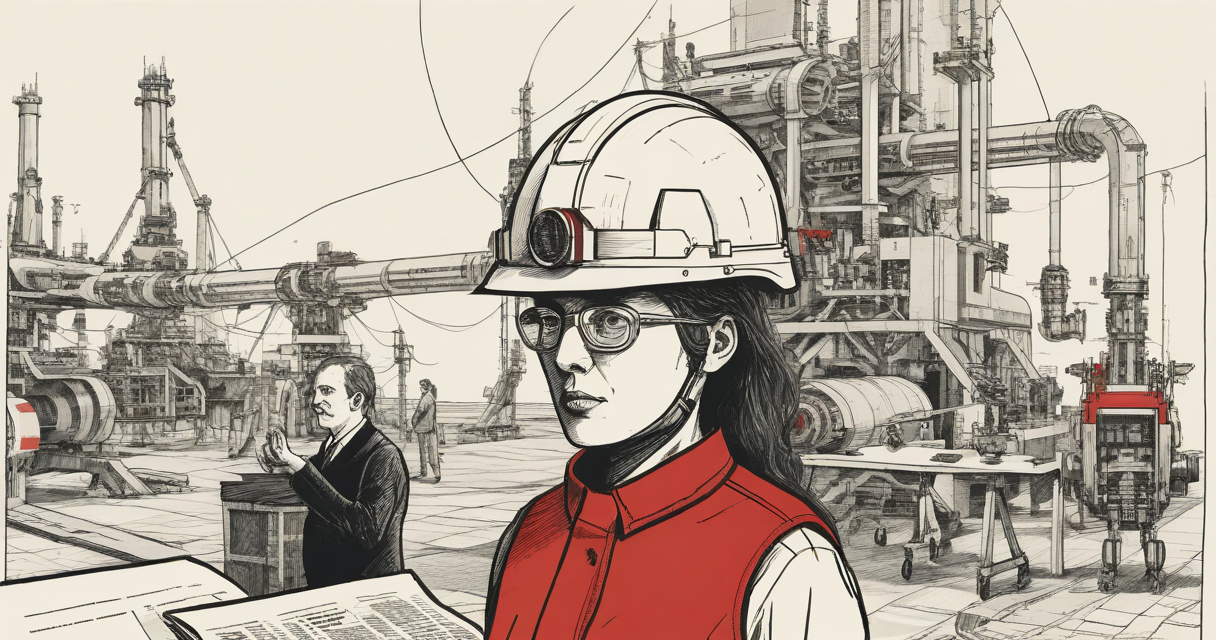
The Mistral AI Now summit wasn’t a model launch event. It was a signal that the European LLM stack has matured past the demo phase and into infrastructure territory. The announcements around Mistral’s enterprise platform, agent tooling, and sovereign deployment options pointed at something most workforce conversations still miss: the constraint on AI adoption is no longer raw model capability. It’s the operational scaffolding around the model.
If you build automation pipelines for a living, or you’re responsible for translating AI capability into actual workforce change, the takeaway is narrower than the keynote suggested. Mistral didn’t release something that fundamentally changes what an LLM can do. They released a tighter, more controllable substrate for putting LLMs into regulated environments without the usual integration tax. That distinction matters because it shifts where the bottleneck sits. The bottleneck is moving from the model to the pipeline, from the prompt to the process, and from the engineer to the operator.
The practical implication for workforce transformation is that the next eighteen months will not be defined by who has access to the best model. It will be defined by who has the discipline to wire models into deterministic workflows that hold up under audit, latency budgets, and the messy reality of existing enterprise systems. The summit reinforced this by leaning heavily on agents, structured outputs, on-premise deployment, and verticalised assistants. None of that is glamorous. All of it is what actually moves the needle.
For the last two years, most enterprise AI strategy has run on a single load-bearing assumption: that capability gains in frontier models would carry the rest of the stack. The thinking went that if GPT-class or Claude-class models kept improving, the integration problems would resolve themselves. Better reasoning would mean fewer hallucinations. Longer context would mean less retrieval engineering. More capable agents would mean less orchestration code. Teams built roadmaps on the expectation that today’s pipeline fragility was a temporary condition.
The second assumption, particularly strong in European enterprises, was that sovereignty and capability were a forced trade. You could have a top-tier American model with all the compliance friction that came with it, or you could have a sovereign deployment with materially weaker performance. CIOs in regulated sectors, banking, defence, healthcare, public administration, were planning around a two-track architecture: frontier models for non-sensitive workloads, smaller local models for anything touching regulated data. The operational overhead of running two stacks was treated as the cost of doing business.
The third assumption, and the one most relevant for workforce planning, was that agentic systems would arrive as a packaged capability. Buy the platform, point it at your tools, and watch the autonomous workflows emerge. A lot of transformation programmes were scoped on that premise. Headcount plans, vendor selections, and process redesigns assumed that agents would behave like software you install rather than systems you engineer. That assumption was always weak. The summit made it harder to keep pretending otherwise.
Three things shifted at the summit, and none of them are about benchmark scores. First, Mistral made the sovereign-versus-capable trade-off significantly less binary. The Medium 3 and Large model tiers, combined with on-premise and air-gapped deployment options, narrow the gap between what regulated enterprises can run locally and what they can access via a frontier API. That gap is no longer wide enough to justify a two-track architecture for most use cases. For European banks, insurers, and public sector buyers, this collapses a planning assumption that has shaped procurement for two years. The strategic question changes from “which workloads can we afford to send to a US provider?” to “why are we still routing anything externally?”
Second, the platform announcements, Le Chat Enterprise, the agent builder, the connector ecosystem, signal a clear bet that the value layer sits above the model, not inside it. Mistral is positioning itself as the orchestration surface, not just the inference engine. That’s a meaningful tell about where they see margin and where they see the customer problem. It also confirms what anyone running production LLM systems already knew: the model is roughly twenty percent of the work. The other eighty percent is connectors, retrieval, evaluation, guardrails, observability, and the boring plumbing that turns a chat interface into a workflow. The summit elevated that plumbing to first-class status.
Third, and this is the part that matters for workforce transformation, the agent tooling on display was deliberately constrained. Structured outputs, tool calling with explicit schemas, evaluation hooks, deployment controls. The framing was closer to “programmable workflow with an LLM inside” than “autonomous digital worker.” That framing is correct, and it’s a quiet correction to the autonomous-agent narrative that has driven a lot of premature headcount decisions. What changed isn’t that agents got smarter. What changed is that a major lab is now publicly building the scaffolding that treats them as components in a pipeline rather than replacements for one. That reframes the workforce conversation from substitution to redesign, and the teams that internalise that distinction will move faster than the ones still waiting for the autonomous version to ship.
The failure mode that follows this kind of summit is predictable, and it has nothing to do with the technology. It starts when a transformation lead reads the announcements, watches the demos, and concludes that the platform has solved a problem that the platform has not, in fact, solved. The pattern is familiar: a vendor narrows a gap, an internal sponsor over-reads the narrowing, and a programme gets scoped on the assumption that the remaining gap is also closed. With Mistral specifically, the drift will show up as teams treating the agent builder and connector ecosystem as a substitute for the orchestration discipline they never built. They will assume that because the substrate is cleaner, the pipeline work is smaller. It isn’t. The pipeline work is the same. It’s just better supported.
The second drift mechanism is more subtle and more damaging. When sovereign deployment becomes operationally viable, the internal politics around AI shift. The compliance and risk functions, which had been acting as a brake on adoption, lose their structural reason to slow things down. That sounds like progress, and in narrow cases it is. But those functions were also, often unintentionally, enforcing a level of rigour on use case selection that the business side wasn’t applying on its own. Remove the friction without replacing the discipline, and you get a surge of low-quality automation projects that wouldn’t have survived a serious review. The pipeline gets built, the model gets deployed, and six months later nobody can explain why the output quality is drifting or why the cost curve looks the way it does. The governance vacuum is the failure, not the technology.
The third and most expensive drift is in workforce planning. The moment a credible European agent platform exists, somebody in finance or strategy will model headcount reductions against it. They will assume that agents, because they are now buildable on a sovereign stack, are also deployable at scale against existing roles. They will conflate the availability of the tool with the readiness of the process. What actually happens in practice is that the first wave of agent deployments exposes how undocumented, inconsistent, and exception-heavy the underlying work really is. The agents don’t fail because the model is weak. They fail because the process they were pointed at was never a process. It was a set of habits held together by a human who knew the edge cases. Stripping out the human before mapping the edge cases is how transformation programmes lose two quarters and a budget cycle. The summit didn’t change that dynamic. It just made it easier to start the mistake.
This isn’t the first time a maturing infrastructure layer has been misread as a maturing capability layer. The same pattern played out with cloud between roughly 2012 and 2016. AWS, Azure, and GCP spent those years building the managed services, networking primitives, and compliance certifications that made enterprise cloud adoption operationally viable. The headlines focused on capability, serverless, managed databases, container orchestration, but the actual shift was scaffolding. The enterprises that won the cloud transition weren’t the ones with the best architects. They were the ones who understood that the platform had solved the substrate problem and that the remaining work was organisational: cost governance, deployment pipelines, security posture, and the slow rewiring of how teams owned services. The companies that treated cloud as a procurement decision rather than an operating model rebuild spent the next five years paying for that misread.
The LLM stack is now at roughly the same inflection point, and Mistral’s summit is one of several signals that the substrate is approaching enterprise readiness. The parallel pattern to watch is the same one that played out in cloud: a brief window where the organisations that invest in the operating model around the technology pull decisively ahead of the ones that invest in the technology itself. The specific disciplines look different, evaluation frameworks instead of CI/CD, prompt and pipeline versioning instead of infrastructure-as-code, output validation instead of integration testing, but the underlying principle is identical. The platform handles the substrate. The organisation has to handle everything else. Teams that treat the Mistral announcements as a buying decision will end up with a cleaner inference layer and the same broken pipelines they had before.
The other parallel worth taking seriously is robotic process automation, which is the closest recent analogue to the agent narrative and the one most transformation leaders should already be scarred by. RPA platforms in the late 2010s promised packaged automation. What they actually delivered was a tool that exposed, at scale, how brittle and undocumented enterprise processes really were. Bots broke every time a UI changed, every time an exception path triggered, every time someone in operations made a small adjustment that nobody told the automation team about. The technology worked. The deployment model didn’t. Agents are heading into the same trap with more capable components and the same organisational naivety. The difference this time is that the substrate, thanks to platforms like the one Mistral is building, is good enough that the failure won’t be obvious for longer. That’s worse, not better. A failure mode that takes eighteen months to surface is more expensive than one that surfaces in six.
The hard truth from the Mistral summit is that the constraint on workforce transformation has moved, and most organisations haven’t moved with it. The constraint used to be access, to capable models, to compliant deployment options, to the engineering talent that could wire any of it together. Those constraints are now, for European enterprises in particular, materially relaxed. What replaces them is a constraint that is harder to procure your way out of: the operational discipline to design pipelines, validate outputs, govern agents, and redesign work around systems that are powerful but not autonomous. That discipline is not a vendor deliverable. It is built internally, slowly, by people who have shipped and broken real systems and who understand the difference between a model that works in a demo and a process that holds up in production.
The leaders who treat this correctly will stop asking which model to standardise on and start asking which processes are actually ready to be redesigned around LLM components. They will resist the pressure to score transformation programmes on headcount reduction and start scoring them on cycle time, exception rate, and audit defensibility. They will invest in evaluation infrastructure before they invest in agent infrastructure. They will accept that the first wave of useful automation looks more like a tightened pipeline with an LLM step inside it than a digital worker replacing a human one. None of that is satisfying to present to a board. All of it is what the next eighteen months will reward.
The summit was a useful forcing function because it removed one of the last credible excuses for delay. If your strategy was waiting for a sovereign, capable, enterprise-grade European LLM platform before committing to real implementation, that wait is effectively over. The substrate is here. What that exposes is uncomfortable: the bottleneck was never the model. It was the operating model. Mistral didn’t ship a replacement for engineering discipline, process design, or the slow work of teaching an organisation how to use AI as infrastructure rather than as a feature. Nobody is going to ship that. The teams that internalise this and start building the scaffolding now will be operating in a different category by the time the next summit happens. The teams that keep waiting for the autonomous version will still be waiting, with a cleaner inference bill and the same broken processes.
Keep Reading
 Hy3 LLM
Hy3 is quietly winning production
Hy3 is topping OpenRouter rankings with no public lineage. NovaMind breaks down what its dominance means for pipelines, automation, and team design.
 LLM engineering
Turning off training does not protect your data
OpenAI keeps re-enabling 'allow training.' Why a UI toggle is not a data control, and the gateway-and-contract architecture that makes training exposure impossible by design.
 LLM engineering
Same task, different bets
Claude, Codex and Cursor pick different tools across 17k runs - here is how to measure that revealed policy and wrap it in controls before it hits production.
Latest on the Wire
Full wire →- AI Ends the Fixed-Function App — and the Author Is Building a Phone for ItHacker News
- Appeals Court Backs Pentagon's Blacklisting of Anthropic Over ClaudeHacker News
- Botched Samsung firmware update bricks smart fridges, spoils food before Korean holidayHacker News
- DHH's Rails World keynote pulls a flagship app off Rails and bets everything on LLMsHacker News
New signal daily · RSS
Stay in the loop
New writing delivered when it's ready. No schedule, no spam.